A new summer episode is out on FranESG: Sustainable Tourism in Rwanda


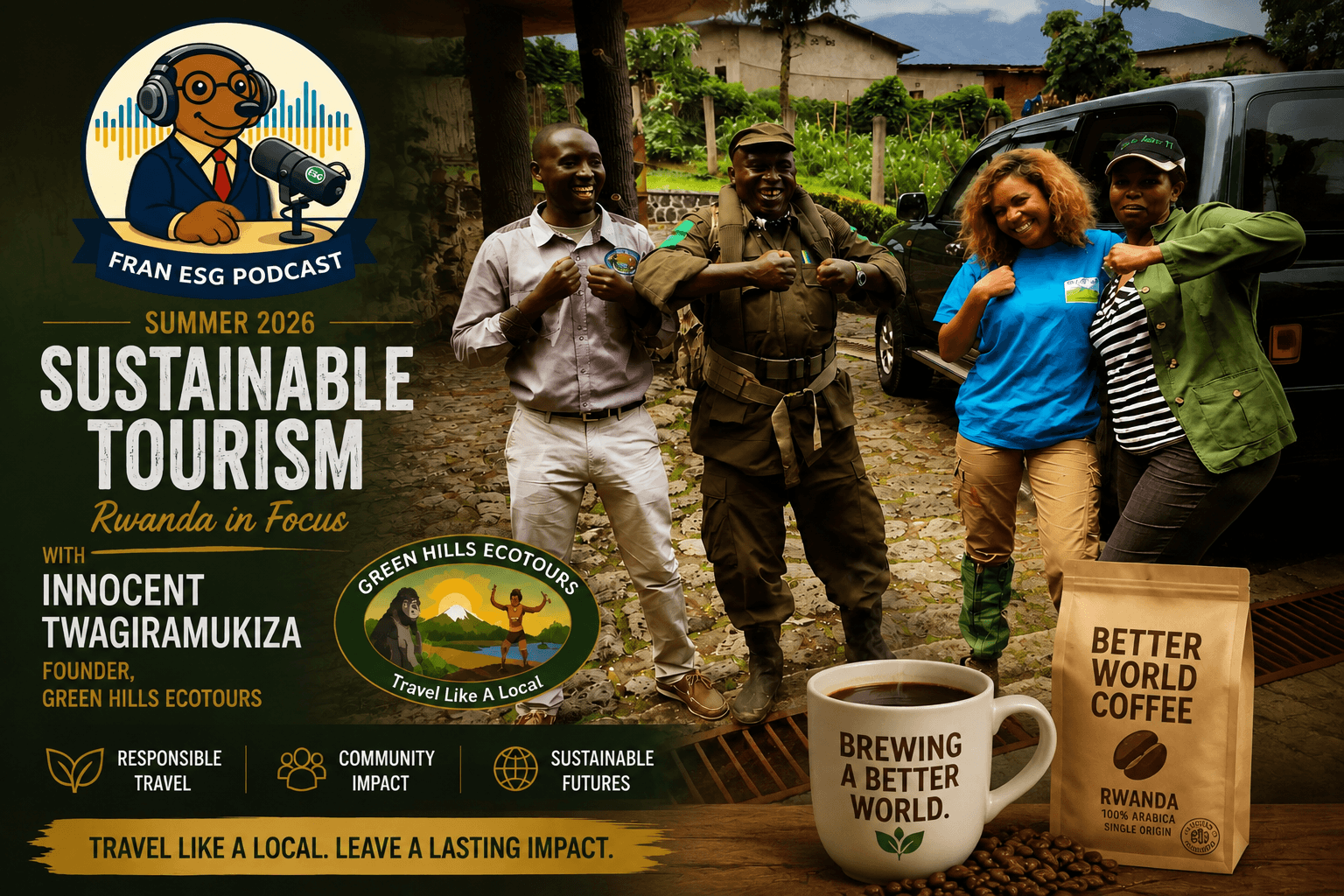
Sustainable Tourism: How Rwanda Is Proving That Conservation and Communities Can Thrive Together
When people think about sustainable tourism, they often picture eco-lodges, reusable water bottles, or offsetting carbon emissions. While these initiatives matter, truly sustainable tourism goes much further. At its best, tourism becomes a catalyst for protecting nature, strengthening local communities, and creating long-term economic opportunities.
That was one of the central messages during my conversation with Innocent Twagiramukiza, Founder of Green Hills Ecotours in Rwanda, on the Fran ESG Podcast.
His story demonstrates that tourism is not simply about visiting beautiful places, it can become a powerful force for sustainable development.
Tourism as a Driver of Conservation
Tourism is sometimes criticised for placing pressure on fragile ecosystems. However, Innocent argues that the opposite can also be true.
When local communities directly benefit from tourism, protecting wildlife and natural resources becomes an economic opportunity rather than a restriction.
Communities that once depended on activities such as poaching can instead build sustainable livelihoods through conservation, guiding visitors, hospitality, agriculture, and cultural experiences.
Instead of asking communities to choose between nature and survival, responsible tourism aligns both objectives.
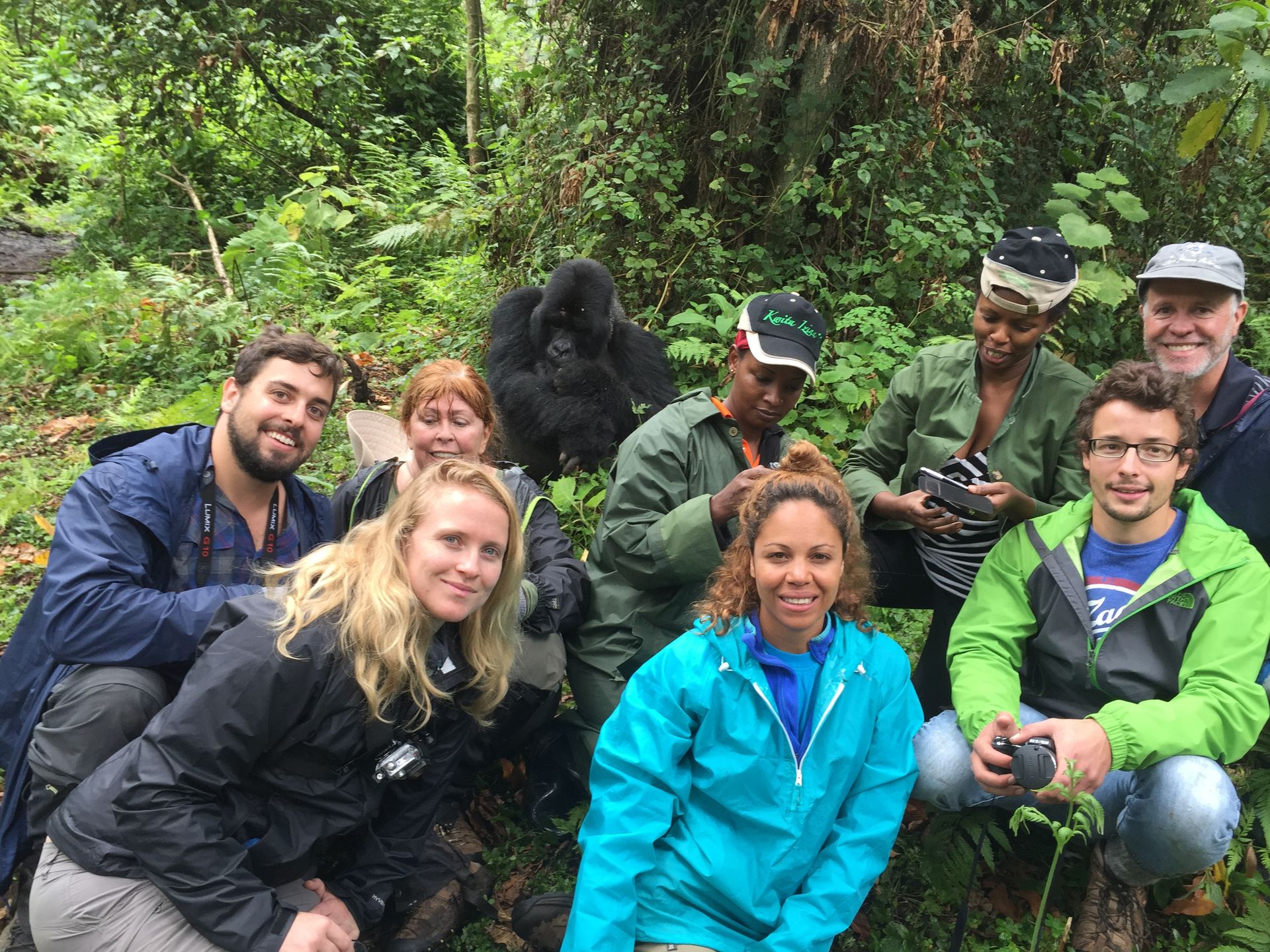
Local Communities Must Benefit
One of the strongest messages from our discussion was simple:
Sustainable tourism only works when local people benefit.
For Innocent, this means ensuring that tourism revenue remains within the community.
Visitors are encouraged to experience authentic Rwanda not only through wildlife but also through local businesses, family-owned enterprises, coffee farms, tea plantations, culture and everyday life.
When communities become partners rather than spectators, tourism creates ownership, pride and resilience.
From Coffee Farm to Coffee Cup
One particularly inspiring initiative is Better World Coffee, founded by Innocent to connect travellers directly with Rwanda’s coffee-growing communities.
Rather than simply buying a bag of coffee, visitors experience the complete journey from growing and harvesting the beans to roasting and brewing them.
The initiative creates a deeper appreciation for the people behind every cup while ensuring more value remains with local farmers.
It is an excellent example of how tourism, agriculture and entrepreneurship can reinforce one another.
Sustainable Tourism Is Good Business
Sustainability is often viewed as a cost.
In reality, Innocent demonstrates that it can become a competitive advantage.
Responsible tourism creates:
employment opportunities
stronger local economies
protection of biodiversity
preservation of culture
authentic visitor experiences
long-term destination resilience
These outcomes are not mutually exclusive—they reinforce one another.
A Lesson for Every Industry
Although our conversation focused on tourism, the broader lesson applies to every business.
Whether you operate in manufacturing, aviation, logistics or hospitality, sustainability creates the greatest impact when environmental protection, economic development and social inclusion work together.
Sustainability should never be viewed as choosing between people and the planet.
It is about creating systems where both can flourish.
Listen to the full conversation:
In the latest episode of the Fran ESG Podcast, Innocent Twagiramukiza shares how Rwanda is demonstrating that tourism can become a driver of conservation, entrepreneurship and community development.
If you’re interested in sustainable tourism, ESG, community engagement or responsible business, this is a conversation you won’t want to miss.
🎧 Listen now on Spotify.